


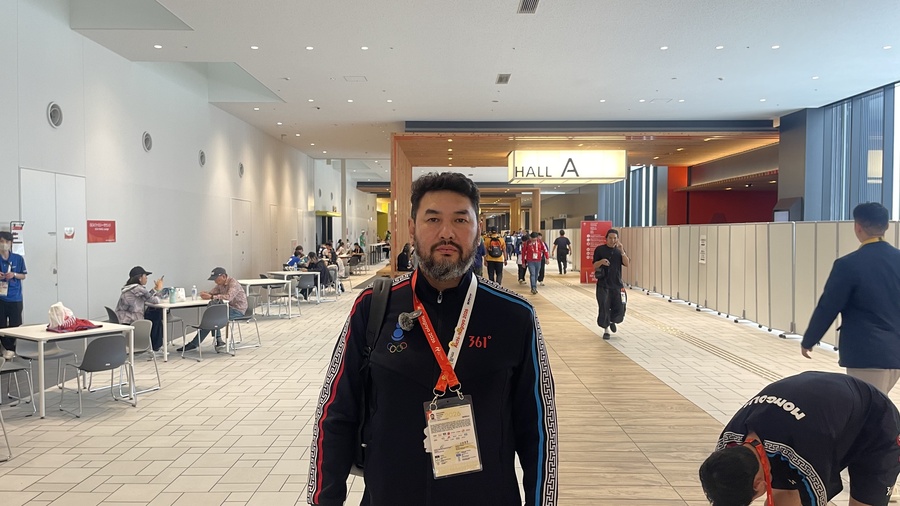
By Naranbat Serjmaa
OCA Youth Reporter from Mongolia
Nagoya, Japan, September 30, 2026: “To hit without getting hit. That is the main philosophy of fencing. To give without taking.”
For the athletes stepping on to the piste, that single, decisive strike is the ultimate goal. But, according to the coaches standing just beyond the edge of the competition floor, achieving that moment requires stripping the sport down to its most foundational elements.
“You have to break down all technical, physical and mental preparation and look at it as a single, solid piece,” explained veteran fencing coach Ganbaatar Dorjsuren, while discussing the meticulous process of building an international-level athlete.
“From footwork and distance control to blade work, it is impossible to learn everything in one day. Today we focus on one specific theme, tomorrow another. You have to build it step by step.”
That systematic approach is critical, especially when the pressure of competition mounts and athletes struggle to recognize their own tactical errors in real-time.
“It is exactly like playing chess,” the coach noted. “The person sitting and watching from the outside sees the moves on the board that the players cannot. We analyze the speed, the strength and the opponent from the outside so we can give our athletes the exact feedback they need to adjust.”
While younger athletes often grasp the physical techniques quickly, the true test lies in application. The hardest transition for any developing fencer is taking the isolated skills perfected in a quiet gym and executing them seamlessly in the chaotic, high-stakes environment of a tournament. Because competitive bouts involve countless unpredictable variables, fencers must constantly spar with a wide variety of opponents to adapt their timing and reflexes.
Reaching the international stage demands far more than just raw talent. It requires decades of investment, specialized equipment and unwavering backing from parents, federations and sponsors. Yet, when asked what truly separates the fencers who succeed from those who fall short, the answer has nothing to do with funding or physical speed.
“What is the single most important thing you need?” the coach was asked. “Consistency. If you are not consistent, nothing else works.”