

By Naranbat Serjmaa
OCA Youth Reporter from Mongolia
Tokyo, Japan, September 22, 2026: “When I first started riding, I was so nervous my muscles locked up, and I kept pulling on the horse—it was bad for the horse, and bad for me.”
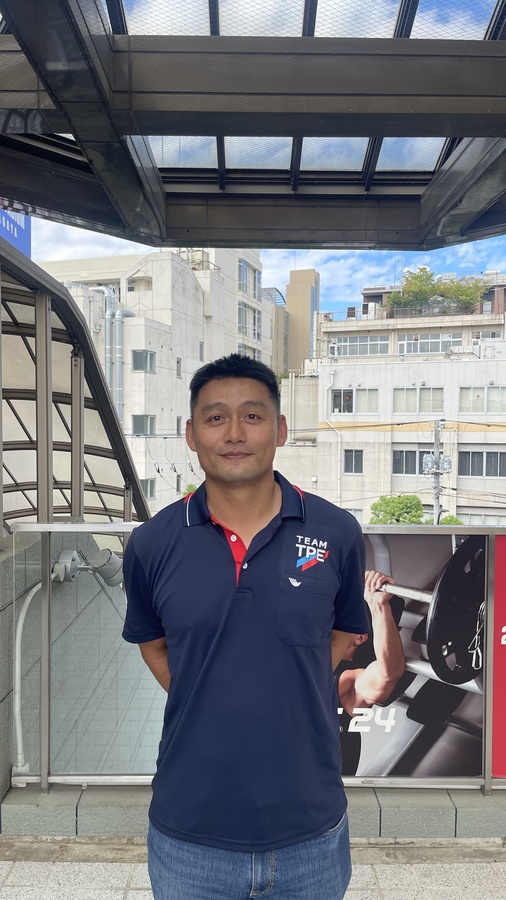
That initial struggle for Chinese Taipei groom and coach Chen Cheng-hsin, known as Nash, defined his early path in equestrian sport.
Serving with the Chinese Taipei delegation at the 20th Asian Games Aichi-Nagoya 2026, Nash knows firsthand that force and tension are the enemy of good riding.
“I realized that, to become a good rider, I needed to learn to relax,” Nash said. “It took me about three years of riding before I could truly relax in the saddle.”
Now passing those lessons on to his own students, Nash identifies balance as the absolute foundation of the sport.
Without balance, rider and horse end up fighting each other.
“The first thing I teach my students is balance,” Nash explained. “When the horse moves, you must hold your own balance so the horse can move straight and you won't fall.”
To build core stability before riders even step into the stirrups, Nash uses unconventional tools.
He often starts beginners on large yoga balls to teach them how to stay centered.
When students move on to horseback, he prioritizes patience over speed, allowing the horse to walk for extended periods while the rider focuses purely on body alignment.
At the Asian Games equestrian competition in Tokyo, Nash spends his days grooming and caring for his coach’s horse.
Through daily care, he has learned to read the subtle signs that indicate whether a horse is ready to perform.
“A good performance happens when the horse wants to move smoothly and calmly on its own, without fighting the rider,” Nash said.
Building that level of cooperation requires constant work off the arena floor.
Rather than pre-competition rituals, Nash relies on quiet, consistent bonding.
He spends hours scratching, patting and reassuring the horse so that animal and human feel like true partners.
For newcomers intrigued by equestrian sport, Nash offers a clear piece of advice.
“You need to become a blank paper,” Nash advised. “Leave your own ideas behind and follow the coach’s instructions completely.”
For Nash, strict discipline on the ground is what opens the door to safety and progress.
“When the coach says move, you move; when they say stop, you stop,” Nash said. “Safety always comes first. Once you have safety, you can take the next steps to become a real rider.”