
Colombo, Sri Lanka, September 6, 2026: Sri Lanka’s story at the Asian Games is not one of constant dominance. It is something far more compelling - a story of eras, unlikely heroes, long silences and extraordinary comebacks.
The journey began in 1951, when Ceylon stepped on to the stage at the inaugural Asian Games in New Delhi.
The first golden chapter arrived in Tokyo in 1958. High jumper Nagalingam Ethirveerasingam cleared 2.03 metres to win gold, becoming the first Sri Lankan to stand atop an Asian Games podium.
But it was the 1970s that produced one of the most memorable periods in the country’s early Asian Games history.
At the 1970 Bangkok Games, Sri Lanka won four medals, including two golds, and four years later in Tehran, another two golds arrived, both from athletics.
S.L.B. Rosa had already made history in Bangkok with gold in both the 5,000m and 10,000m, while Wickremasinghe Wimaladasa produced one of the defining performances of the next Games, winning the men’s 400m in a Games-record 46.21 seconds. The men’s 4x400m relay team followed with another gold, clocking 3:07.40 and setting an Asian Games record that would remain on the books for 12 years.
By the late 1990s, the island was preparing to enter another golden age, and this time it was driven by a generation of sprinters who would redefine Sri Lanka’s place in Asian athletics.
Bangkok 1998 became a landmark Games. Damayanthi Dharsha won the women’s 200m and 400m titles, setting an Asian Games record of 22.48 seconds in the 200m, while Sugath Thilakaratne stormed to gold in the men’s 400m in 44.99 seconds.
Dharsha’s double made her one of the most successful Sri Lankan athletes in Asian Games history, eventually accumulating three gold medals across her career.
The momentum continued into Busan in 2002. Dharsha successfully defended her 400m crown, while Sri Lanka’s athletics contingent continued to make its presence felt. Overall, the country collected six medals at the Games, including two golds, marking one of its strongest performances of the modern era.
At Incheon 2014, cricket gave Sri Lanka a different kind of Asian Games triumph. The men’s cricket team defeated Afghanistan by 68 runs in the final to claim gold, while the women’s team secured bronze. It was a reminder that Sri Lanka’s Asian Games identity was no longer confined to the track - its sporting strengths could appear in completely different arenas.
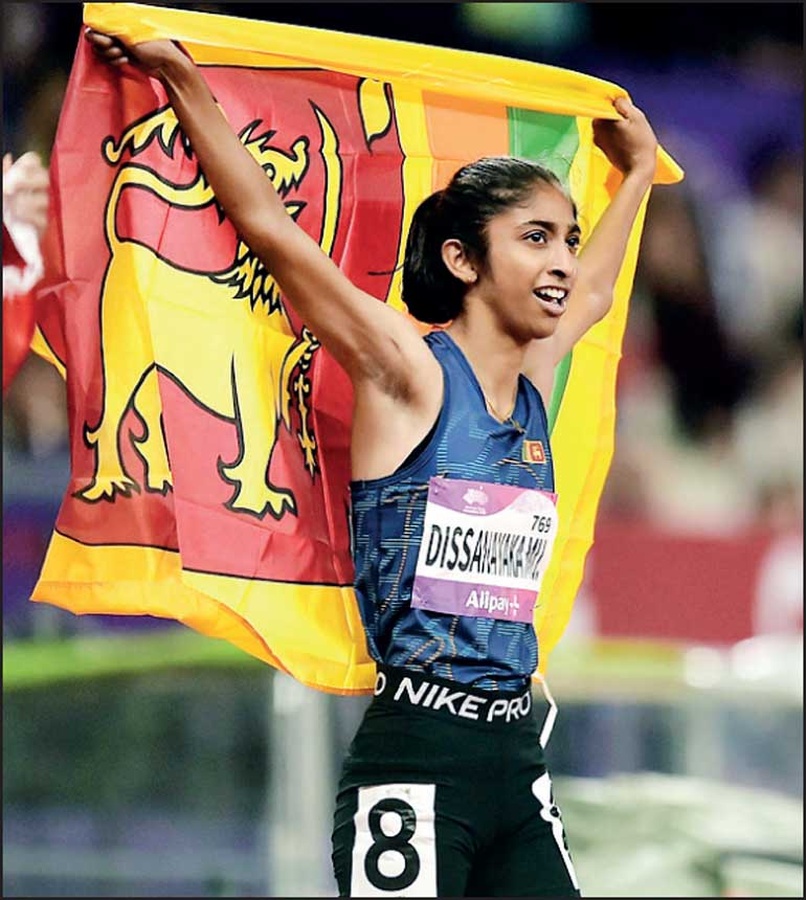
At the most recent Asian Games - Hangzhou 2022 - Sri Lanka returned with five medals, one gold, two silver and two bronze - its highest medal haul since Busan 2002. At the centre of that resurgence was a teenager from Kandy.
Tharushi Karunarathna won the women’s 800m in 2:03.20, becoming the latest name to join Sri Lanka’s long line of Asian Games champions.
Across its Asian Games history, Sri Lanka has now accumulated 51 medals - 12 gold, 13 silver and 26 bronze medals.
And now, another chapter is waiting to be written at Aichi-Nagoya.