
Beijing, China, June 2, 2026: The OCA showcased its growing leadership in anti-doping education during the WADA Asia/Oceania International Symposium.
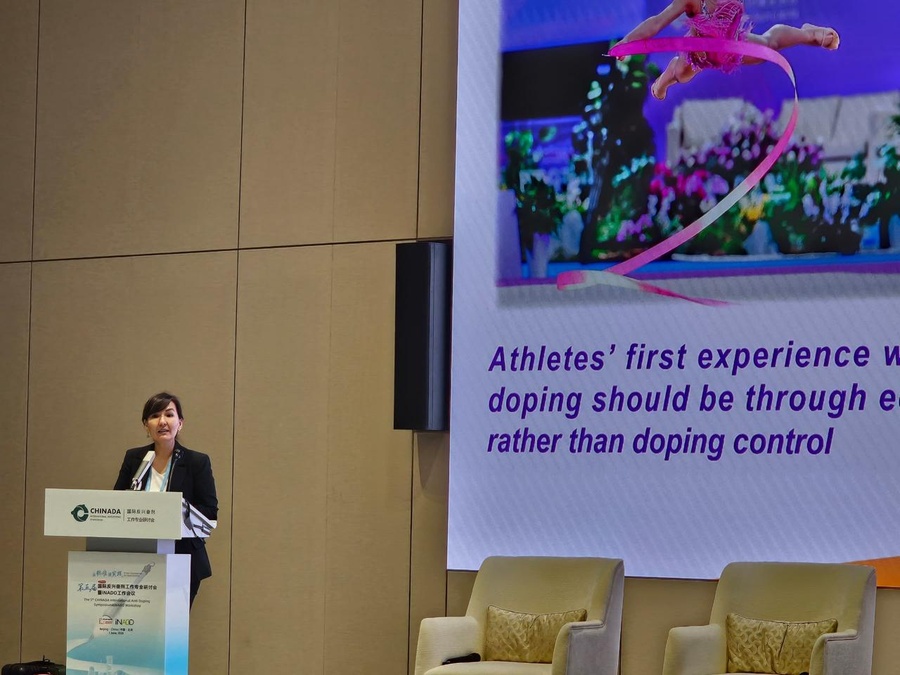
Two members of the OCA Medical Committee and Anti-Doping Commission, Mr. Gobinathan Nair and Dr. Venera Abdulla, delivered a joint presentation on OCA-led pre-Games and event-based education initiatives across Asia.
The presentation highlighted OCA’s pioneering efforts in implementing mandatory pre-Games anti-doping education for major continental events, including the Asian Games, Asian Winter Games, Asian Youth Games and Asian Beach Games.
Guided by the principle that an athlete’s first experience with anti-doping should be through education rather than doping control, OCA has introduced one of the largest education programmes of its kind in the region.
The speakers emphasized the successful collaboration between OCA, WADA, National Olympic Committees (NOCs), National Anti-Doping Organizations (NADOs) and Regional Anti-Doping Organizations (RADOs) in delivering multilingual and athlete-centred education initiatives.
One of the major achievements included the translation of various ADEL (Anti-Doping Education and Learning) e-learning modules into more than 20 Asian languages, significantly improving access to anti-doping education for athletes throughout Asia.
The presentation also showcased impressive participation statistics across recent OCA Games:
*96.9% completion rate at the 2023 Asian Games
*99.9% completion rate at the 2025 Asian Winter Games
*93% completion rate at the 2025 Asian Youth Games
*97.8% participation rate among coaches at the 2026 Asian Beach Games.
In addition to the mandatory e-learning programme, OCA also implemented a range of additional pre-Games and Games-time education initiatives, including webinars, social media awareness campaigns and social science research projects aimed at better understanding athletes’ values, experiences and concerns related to clean sport.
Furthermore, clean sport education formed an important part of the “Guarding the Asian Games” project, which included interactive education booths and Games-time awareness activities for athletes and athlete support personnel at the Games venues. As part of this initiative, Clean Sport Ambassadors were nominated and invited to support the project by engaging with participants and delivering clean sport education and awareness activities in different languages during the Games.
The speakers also addressed key challenges faced in implementing large-scale education programmes, including verification of education certificates, language barriers, athlete engagement during Games-time and measuring the long-term impact of educational activities.
The presentation concluded with OCA reaffirming its commitment to strengthening clean sport education through athlete-centred, interactive and multilingual approaches, while continuing close collaboration with partners across Asia to protect the integrity of sport and support clean athletes.


