

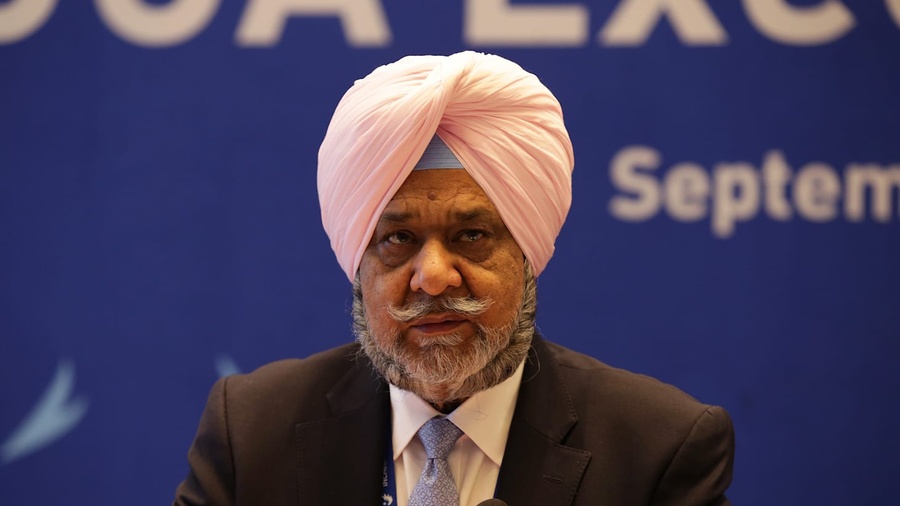
Lausanne, Switzerland, May 27, 2026: Randhir Singh, five-time Olympian and first Indian OCA President, dies aged 79, Olympics.com reports.
He was the first Indian shooter to win an Asian Games gold medal and became one of the country’s most influential sports administrators after retirement.
Born on October 18, 1946, in Patiala, Punjab, Raja Randhir Singh came from a family deeply associated with Indian sport and played a pivotal role both on and off the field.
Randhir first made his mark in shooting, specialising in trap and skeet events. He represented India at five Olympics - Mexico City 1968, Munich 1972, Montreal 1976, Moscow 1980 and Los Angeles 1984 - in trap.
Randhir Singh became the first Indian shooter to win an Asian Games gold medal when he topped the podium at Bangkok 1978 in men’s trap.
He also won a silver medal in the team event and an individual bronze at the 1982 Asian Games in New Delhi.
In recognition of his achievements in shooting, he was conferred with the Arjuna Award - one of India’s highest sporting honours - in 1979.
After retiring from competitive shooting in 1994, Randhir Singh devoted himself fully to sports administration and emerged as one of the most respected figures in the Olympic movement.
He served as the Secretary General of the Indian Olympic Association (IOA) from 1987 to 2012 and was a member of the International Olympic Committee (IOC) from 2001 to 2014 before continuing as an honorary member.
Randhir Singh also held several key positions within the Olympic Council of Asia (OCA), serving as secretary general from 1991 to 2015 and later as acting president from 2021.
In September 2024, he became the first Indian to be elected President of the OCA at the body’s 44th General Assembly in New Delhi. He later became honorary life president.
Randhir Singh was also instrumental in bringing the 2010 Commonwealth Games to New Delhi and remained a prominent voice in Asian sport administration until his final years.
Source: Olympics.com